Rulers, kings, empires, came and went throughout the ancient world with each passing empire influencing those that followed. The city of Ephesus, a trading post on the Aegean Sea, at the mouth of the Cayster River, estimated to have a population of 250,000 people, was one such marvel of the ancient world. The city ruins are now inland due to silt from the river, time, and the changing landscape.
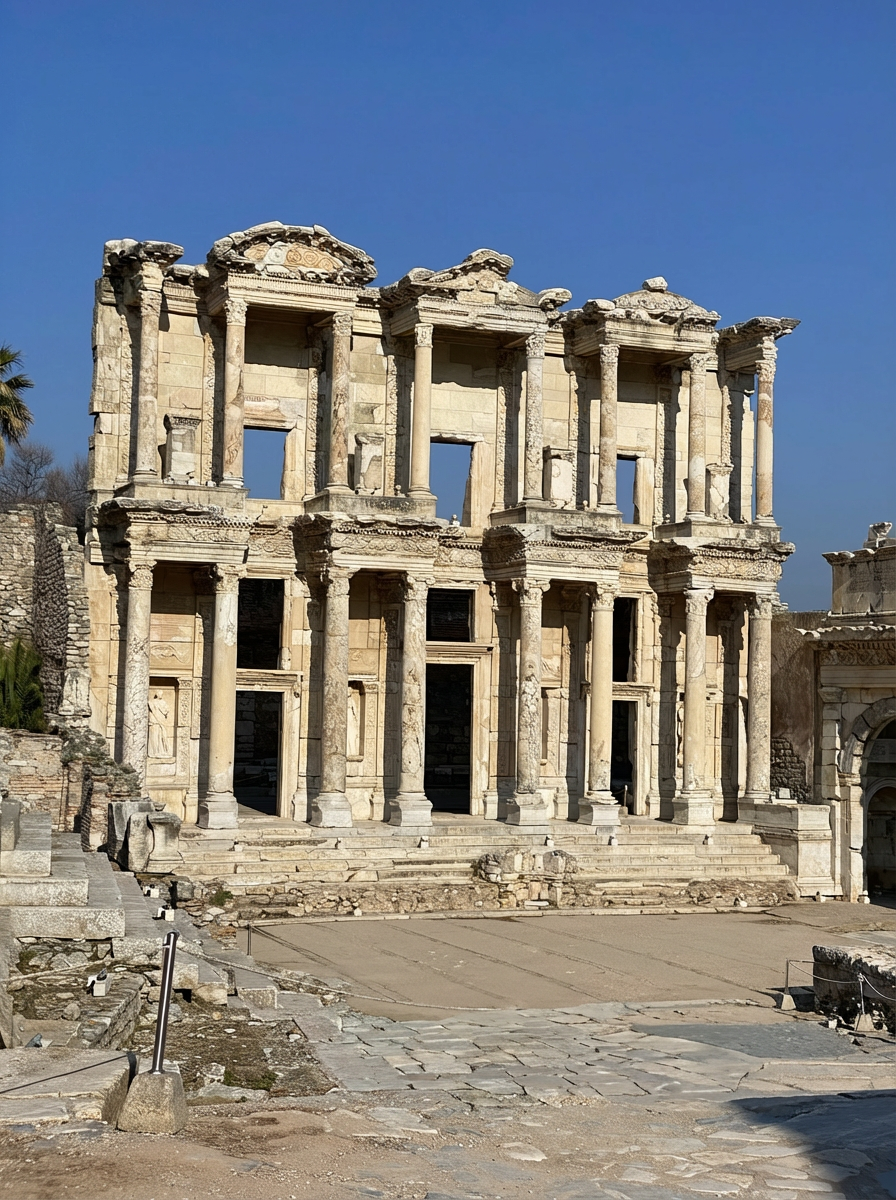
Was the library found intact this way? No. Turkey is a land of earthquakes and the ruins suffered not only with the ravages of time but also from the violence of multiple quakes through the centuries. The library pieces were put to gather like a puzzle and missing pieces were added, matched to the original. What kinds of books were stored here? What were the multiple functions of such a place? What knowledge and information could one discover here? Sadly, all the books have been signed out and all are over due. We will not have complete answers
What struck me most? How smart the Greeks and Romans were, creating a city that was livable and a society that had structure and culture. Ephesus had warm water for baths, running water near the side by side communal toilets, a stadium that held 25,000 people. It was a major port controlling commerce and trade in the region. The Temple of Artemis, the city’s protector was found here.
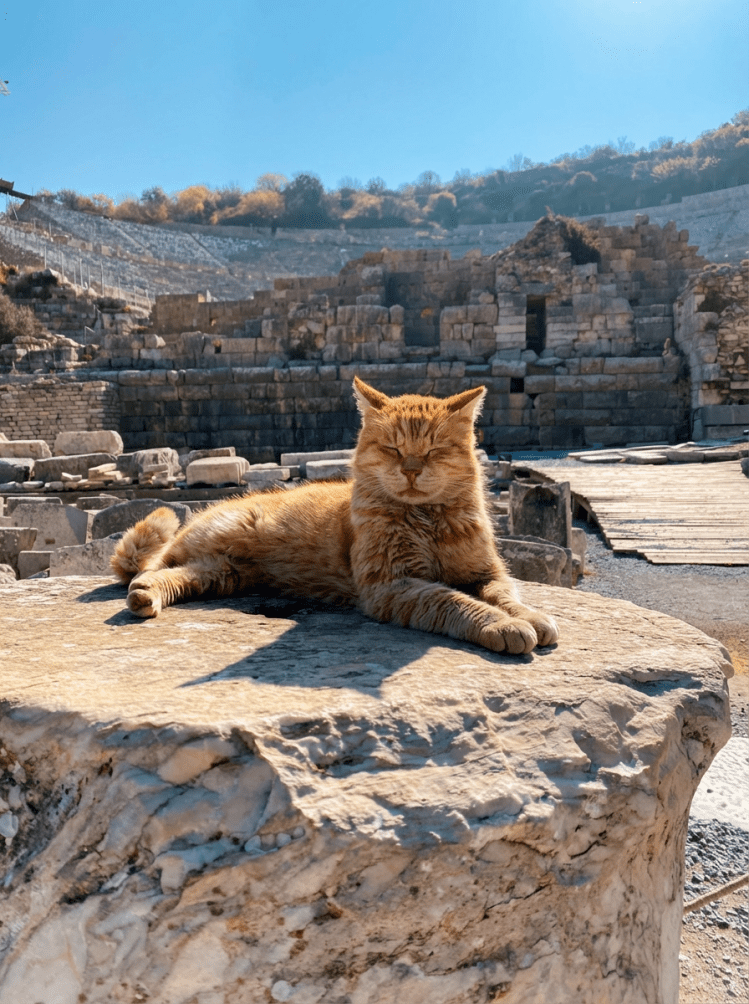
Today the site is carefully monitored by countless charming cats.
 Explore Learn Share